
Wax vs. Ceramic vs. Graphene
There are four real choices for protecting paint. They sit on a ladder of durability and price, each tier solving the same problem on a longer time horizon than the one below. This is the honest map — what each does well, where it stops, and how to tell which tier you're actually shopping in.

Walk into any auto-parts store and the protection aisle looks like noise. Bottles next to tubs next to spray cans, half of them claiming the same things in slightly different fonts.
Underneath the labels, there are really four product categories. Each one solves the same fundamental problem (UV light and oxygen are slowly breaking your clear coat), but they solve it on different time horizons, at different price points, and with very different application risk.
The cleanest way to understand them is on two ladders: durability and total cost. Then a third axis nobody talks about until they regret it: how badly a bad install can go.
Here's the map.
Wax: weeks of protection, lowest stakes
Carnauba and synthetic-blend waxes are the floor of the category. They're the protection most owners over thirty grew up with. They go on with a foam pad, buff off in ten minutes a panel, and leave a depth of warmth on dark colors that's genuinely beautiful for the first few washes.
What they do well: gloss for special occasions. Cheap. Almost impossible to mess up. There's no “you ruined the paint” failure mode hiding in the bottle.
Where they stop: durability. A carnauba wax in real-world conditions — a daily driver, a few rainstorms, a couple of touchless car washes — typically holds for 4–8 weeks before the bead pattern flattens and water starts sheeting instead of pearling. (A premium carnauba on a garage-kept car in a mild climate can stretch that to 8–12 weeks. Most owners aren't living that scenario.) By month three, the protection is essentially gone, even if the gloss looks fine in dry conditions.
The trade is honest: the easiest thing on the shelf, with the shortest protection window. If you wax weekly anyway because you enjoy the ritual, it's a fine answer. If you'd like to set it down for half the year, it isn't.
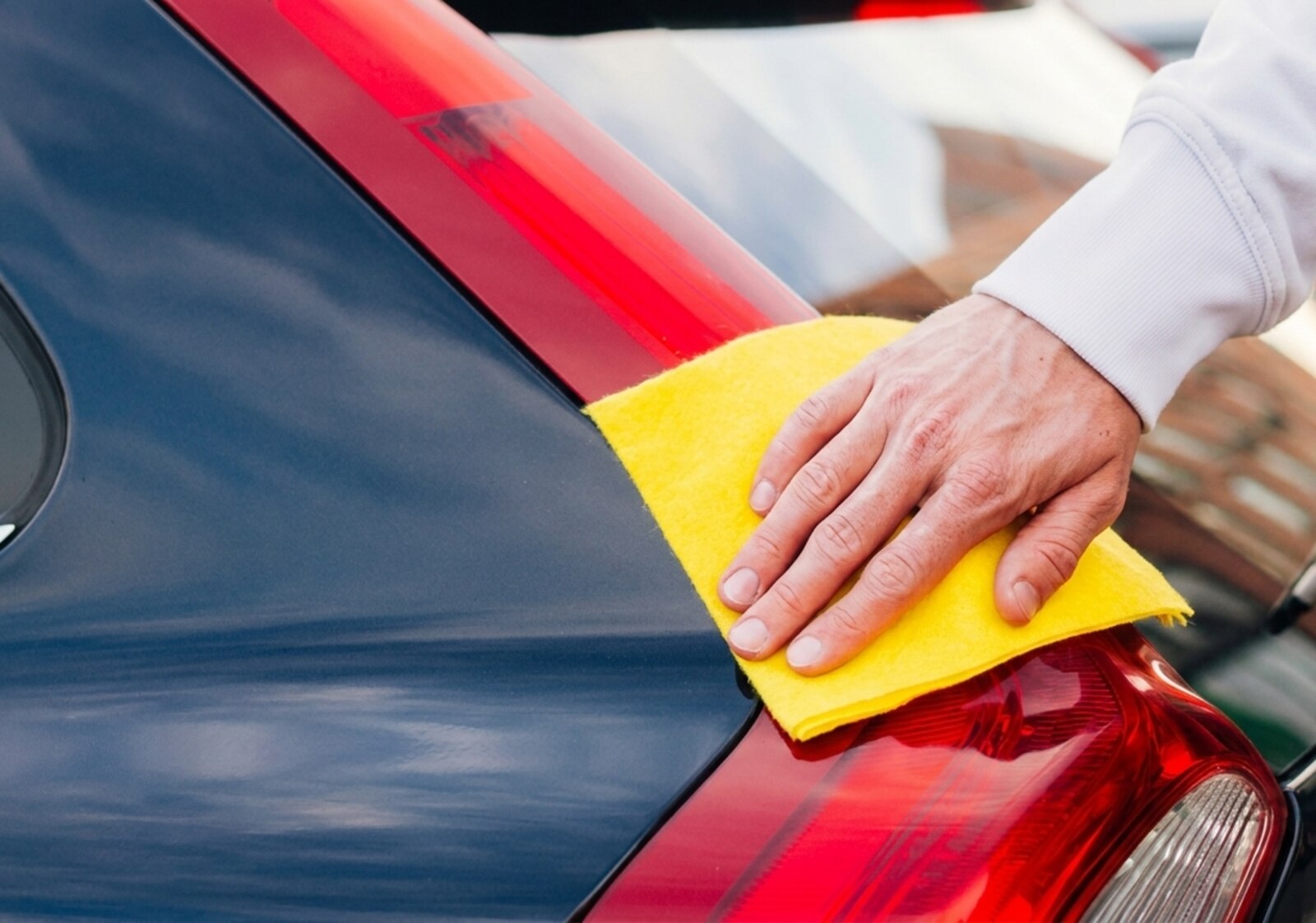
Synthetic / polymer sealants: months, not weeks
Sealants are wax's modern cousin — the next floor up. Polymer chemistry instead of plant-derived oils. Bond chemistry instead of mechanical adhesion. Application is similar to wax (pad on, wipe off), but the molecular grip on the clear coat is tighter, so the protection holds longer.
What they do well: a real step up in durability with about the same effort as wax. Most sealants hold 4–6 months in real conditions. Better gloss than carnauba on lighter colors. Less rebuffing required between washes.
Where they stop: hardness. A sealant is still a soft layer sitting on the clear coat. Bird droppings, tree sap, and acidic fallout can still etch through it to the paint underneath if they sit too long. A ceramic coating is meaningfully harder — it adds a thin, vitreous layer that resists etching the way a sealant can't.
Sealants also tend to be messier than a graphene spray. More residue at the buff stage, tighter removal windows, a higher chance of streaking on a hot panel. Not catastrophic, just more attention required.
For someone moving up from wax who isn't ready for a coating yet, sealants are a reasonable middle step. For someone who already wants a year-long answer, they're not the destination.
Pro-shop ceramic coatings: years of protection, four-figure install
This is where the spectrum bends. Pro-shop ceramic coatings — the kind a detailer installs in a controlled environment over a day or two — are real, durable, and serious. They typically protect for several years per install. The hardness is a step change. The hydrophobic behavior is dramatic.
What they do well: longevity that no other category matches. Multi-year UV defense. The deepest gloss available. A genuine premium-paint experience, the kind enthusiasts pay real money to preserve.
Where the trade-off lives: cost and install risk.
The cost is $600–$2,000+ per install at a reputable shop. That's the entry fee. It buys you a controlled environment, a trained installer, and predictable results.
DIY solvent permanent ceramic kits exist — and they cost less in dollars but more in everything else. A careful DIY install takes roughly a full day: prep, panel-by-panel application, and the controlled flash-and-buff cycle that the product demands. If you're doing paint correction first (which most DIYers should), add another day. The product cures fast: a high spot that flashes past its working window hardens into a visible streak or ridge that has to be machine-polished off. If you miss a panel and try to come back to it, the boundary between the cured and freshly-applied product reads as a visible line. None of this is unrecoverable, but recovery means a paint-correction polish, not a re-spray. This is not a category where you learn from mistakes mid-job.
That's the honest trade-off: pro ceramic is a real product, but it's expensive in shop time or risky in DIY time. For owners with the budget or the patience, it's a legitimate destination. For everyone else, the question is what fills the middle.
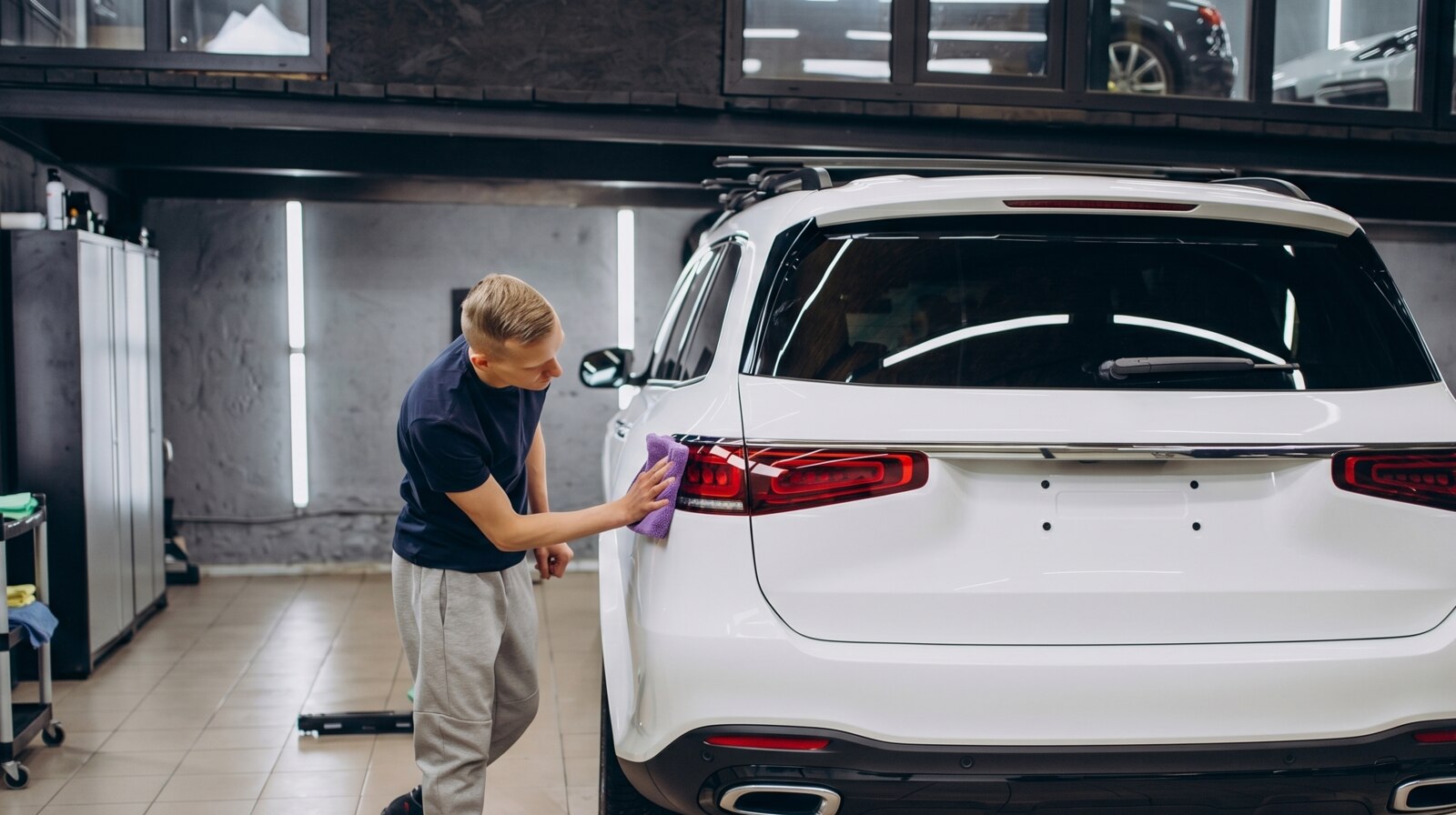
Spray-on graphene + SiO₂: the new tier
This is the category ShineMD lives in. The framing is straightforward: a graphene-led ceramic spray that goes on like a wax, lasts most of a year, and skips the four-figure install.
The chemistry pairs graphene — the strongest material ever measured at the atomic plane, and a 2010 Nobel Prize material — with SiO₂, the same silicon-dioxide chemistry that hardens every ceramic coating on the market. Graphene adds toughness; SiO₂ adds hardness. Together, a coating that resists both being scratched and being cracked. (For the longer version of why those two materials need each other, and how the lattice-scale strength of graphene translates to a coating on your hood, the science article is one click away.)
What it does well: 6–12 months of protection, depending on climate and wash frequency. Bonded protection — not a wax sitting on top, waiting to wash off. Hydrophobic surface chemistry that beads and sheets water like a pro install does. A genuine wet-look gloss. And — the part that matters most for a DIY product — an application that takes one walk-around the car. Spray, spread, move on. If you streak a panel, you spread it again. There's no mistake that locks in before you can fix it.
Where it stops: it isn't a multi-year coating. A pro-shop install will outlast it on durability. That's the trade. You buy back the $600+ install fee and the DIY install risk — in exchange for re-applying every 6–12 months on a Saturday morning.
For most owners, that's the right shape of the deal.
The four tiers, side by side
| Protection window | Your time per year | Install risk | Typical cost | |
|---|---|---|---|---|
| Carnauba wax | 4–8 weeks | 3–10 hours | Very low | $15–$40 |
| Polymer sealant | 4–6 months | 1.5–3 hours | Minor (streaking) | $25–$60 |
| Pro-shop ceramic | Multi-year | A day or two of DIY every few years, or pay the shop | High (mistakes need machine polishing) | $600–$2,000+ |
| ShineMD | 6–12 months* | 30–90 minutes | Low (recoverable while wet) | $40–$60 |
*Depending on climate and wash frequency.
The column that decides it, drawn to scale — hours of your own time per year of protection (bars show the high end of each range):
TIME-PER-YEAR BAR CHART (pure CSS, no classes — editable widths below; rule: width % = range max / 10 hours)Pro-shop ceramic isn't on this chart — done at a shop you spend dollars, not hours; done DIY it's a day or two of careful work every few years.
The pattern is the obvious one: every step up the durability ladder costs more in dollars, more in time, or more in install risk — until the spray-on graphene category, which broke the pattern. It buys most of a year of protection for the price and effort of a polymer sealant.
That's the reason this category exists. Protection only works if it's easy enough to put on.
Which tier are you actually shopping in?
A short decision frame.
If you want to wax your car every weekend because you enjoy the ritual, wax is fine. Don't overthink it.
If you want a real step up in durability without changing your routine much, sealants are the natural next step. Just plan to redo every four to six months and accept that hardness isn't part of the deal.
If your paint is the centerpiece of a build, you garage the car most of the time, and a four-figure spend doesn't sting, a pro-shop ceramic install is a defensible answer. The longevity is real.
If you want most of the ceramic-tier benefit without the cost or the install risk, on a daily driver or weekend car you actually use, that's where the spray-on graphene category sits, and that's the lane ShineMD was built for.
There's no “best protection for everyone.” There's the best protection for what you'll actually do consistently. The honest version of that question is the one worth answering.
The cleanest signal is what your paint does in the rain
The cleanest signal is what your panels do in the rain.
Wax stops beading well by week six. Sealant stops beading well by month four. A ceramic coating — pro-shop or graphene-led — keeps beading past the six-month mark on most cars. That's the working part of the protection, made visible.
Drive past your car in the rain. Whatever it's doing now is what your current product is buying you.
IMAGE: real owner footage — water beading on a graphene-coated black RX-8 hood (Carson 4K frame, source: _incoming/CARSON)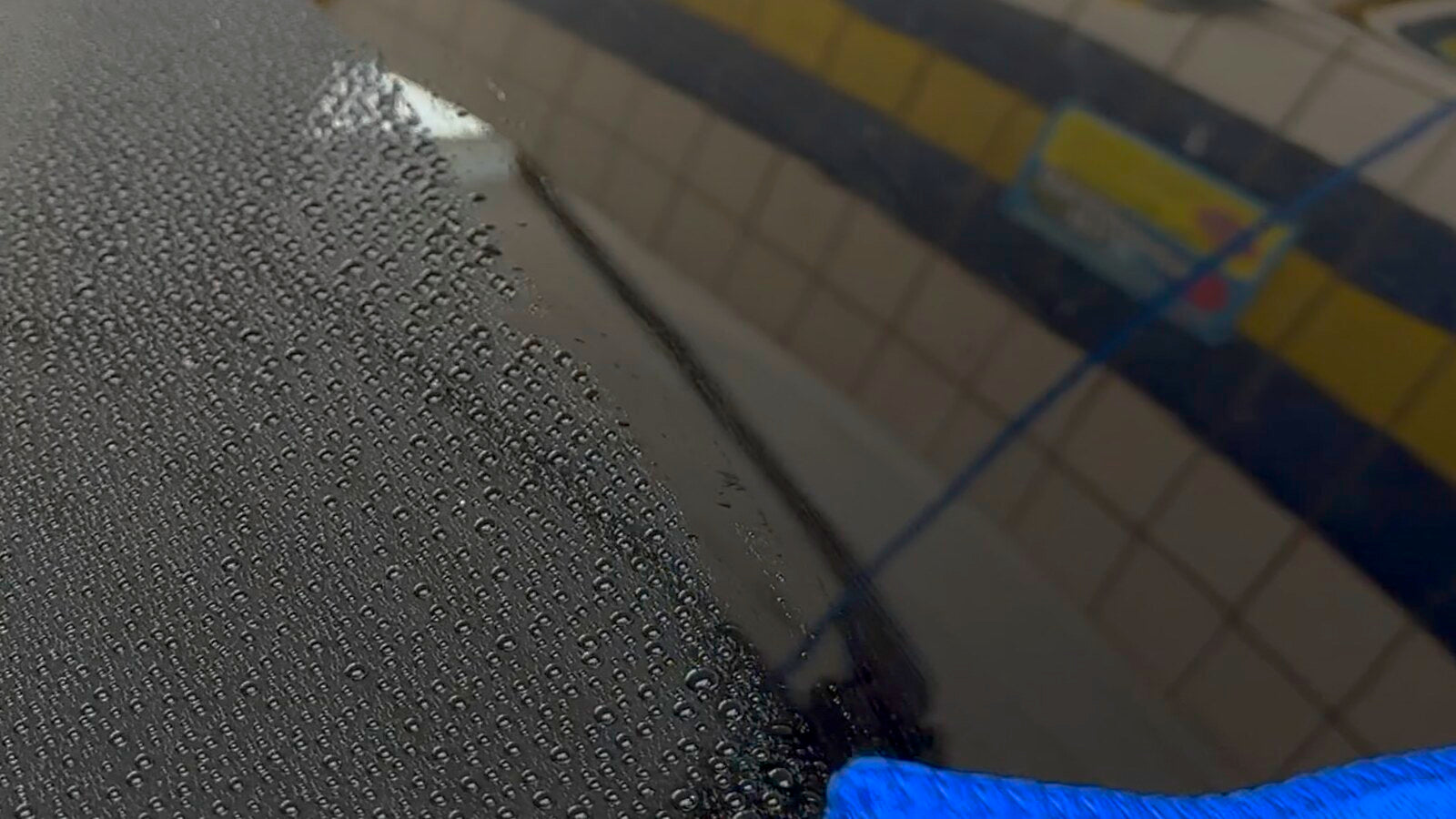
If the answer is “not enough,” the next move is a tier up.
Step up a tier.
Graphene + SiO₂ formula. One walk-around the car.
60-day money-back guarantee.
Formulated in USA · Fast shipping · No subscription required
- Fast Shipping
- 60-Day Moneyback
- Formulated in USA
- 900+ Reviews
- Graphene Featured In NYT · Forbes · WaPo